

Two hours
The lanes, the château square, a coffee on a terrace. The evening before, or the morning you leave, before 11 am.
Gordes, on foot
The village is a ten-minute walk from the house. Here is what we do there ourselves, with how long it takes and the right hour for each.
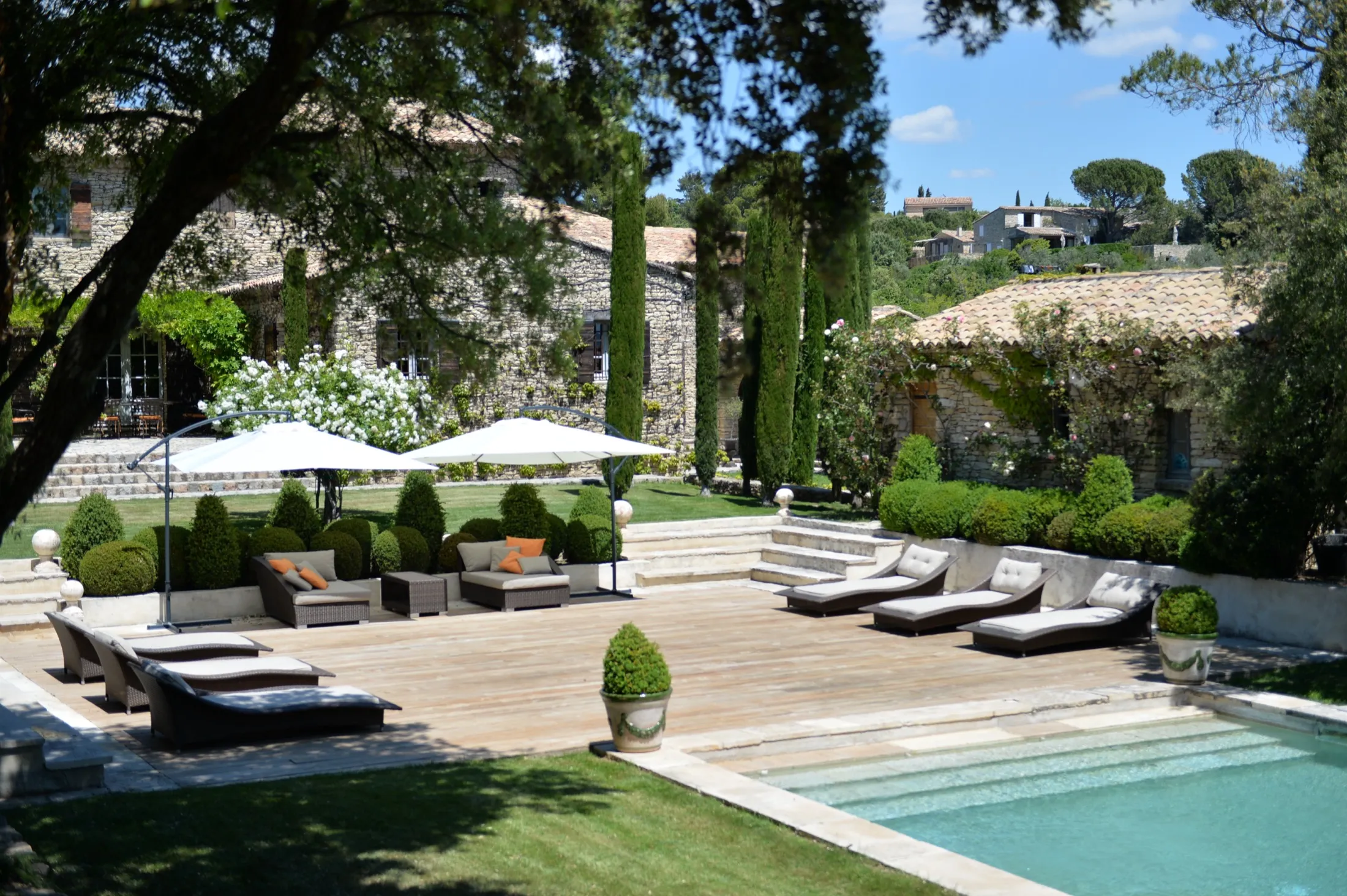
Gordes is a hilltop village in the Vaucluse, listed among the Plus Beaux Villages de France, facing the Luberon. You first see it from afar, around a bend in the road: stone houses stacked in tiers on the rock, crowned by the château. But Gordes is more than its postcard. You have to go in, get lost, and come back at another hour.
Villa Hautvallon is about ten minutes on foot from the center. What is a day trip from Avignon becomes a stroll before breakfast here, or an easy walk home after dinner. You have the village when the others do not.
In the village
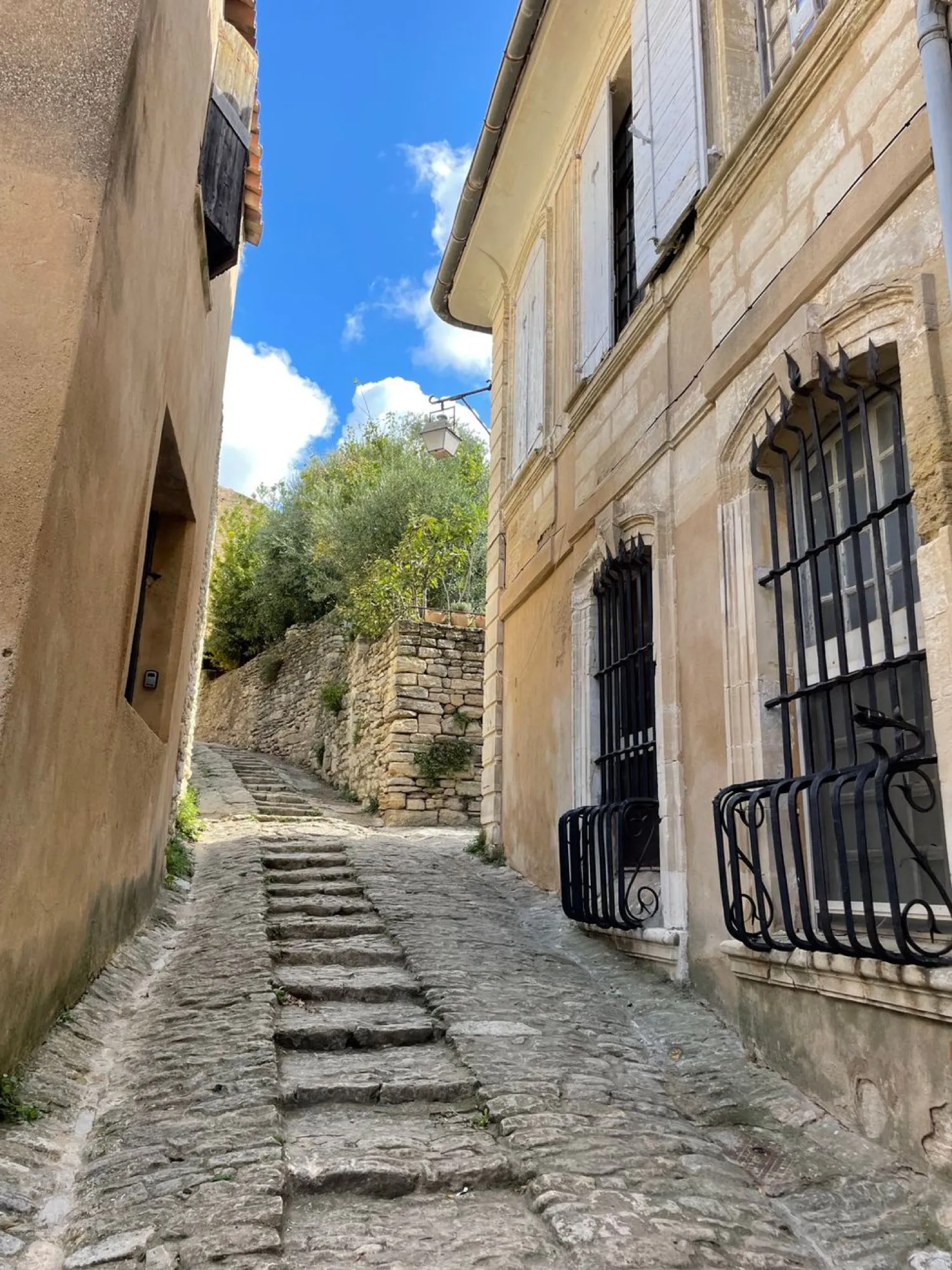
The calades are the cobbled lanes that step downhill from the château square. They pass under vaults, run alongside hanging gardens and open all at once onto the valley. Take them one way in the morning, the other in the evening: the light is never the same.
A medieval fortress rebuilt in the Renaissance, it stands over the square where everything meets. It hosts exhibitions, and its great carved fireplace is reason enough to go in.
Beneath the houses lies a second Gordes, cut into the rock: vaulted rooms, cisterns, carved stairways and an old olive oil mill. The visit is self-guided, and cool even in midsummer. Slip it in before lunch, when the village above is at its hottest and busiest.
A few steps from the château. Plain on the outside, painted on the inside: you go in for the cool, you stay for the colors.
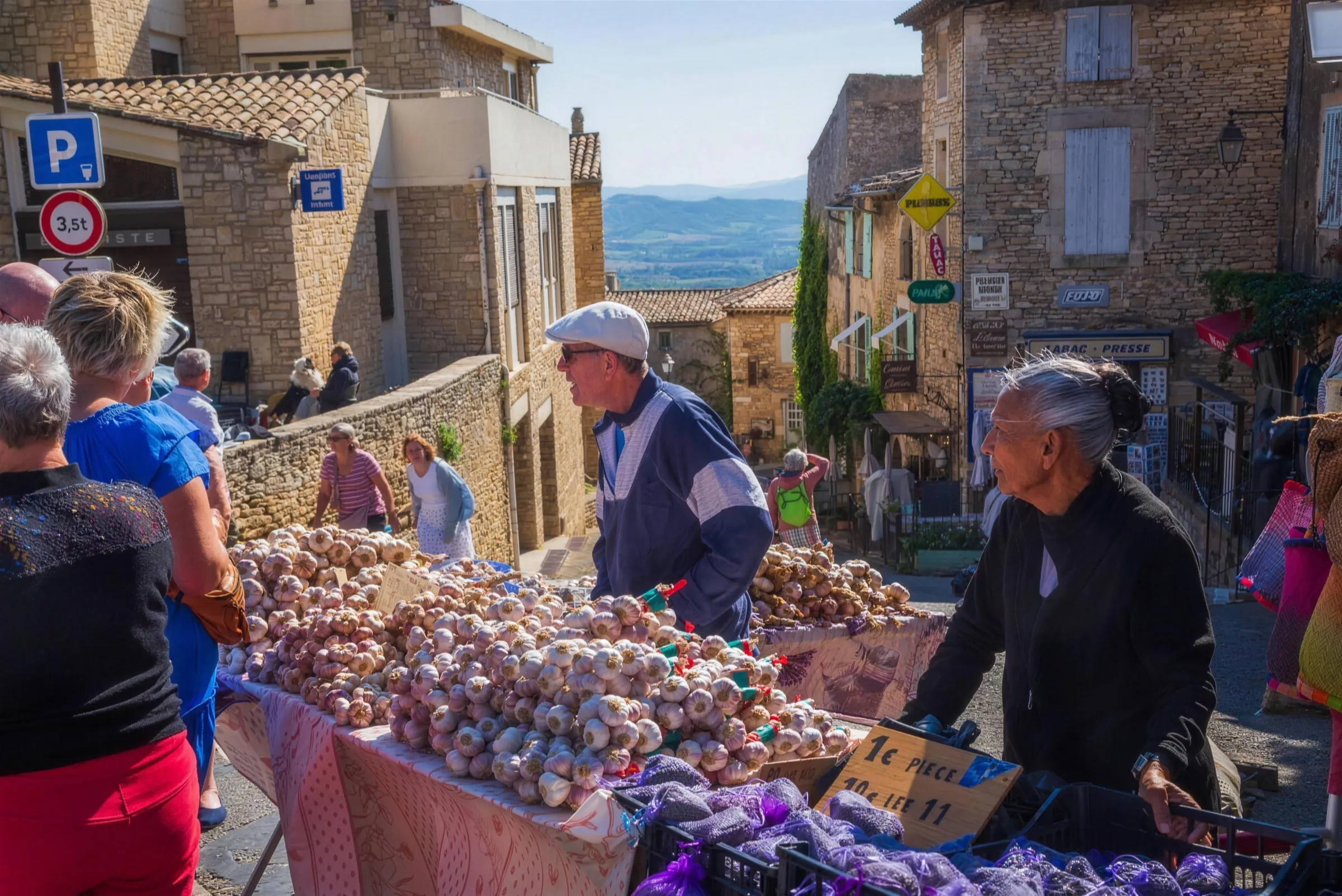
At the foot of the château: peaches and melons from the Comtat, goat’s cheeses, olives and tapenades, lavender honey, soaps, tablecloths in Provençal colors. It is the liveliest morning of the week. Walk down before 9 am and leave the car at the gate: the center is taken over by the stalls.
Gordes has drawn artists since the postwar years, when painters such as Chagall and Vasarely settled here. What remains is a village of galleries, often run by the artists themselves. Go in, take time to talk: that is often where you find the souvenir that lasts.
The most famous view is not taken from the village but facing it, from the lookout on the road below. In the morning the tour buses stop one after another. In the evening the stone turns golden, then pink, and you are almost alone.
Our three tables are about ten minutes away: La Trinquette, the bistro; Beefbar, the summer terrace; La Table de la Bastide, the grand table. Jean-François books for you. You walk back along the path, phone flashlight in hand: nobody drives.
Nearby, by car
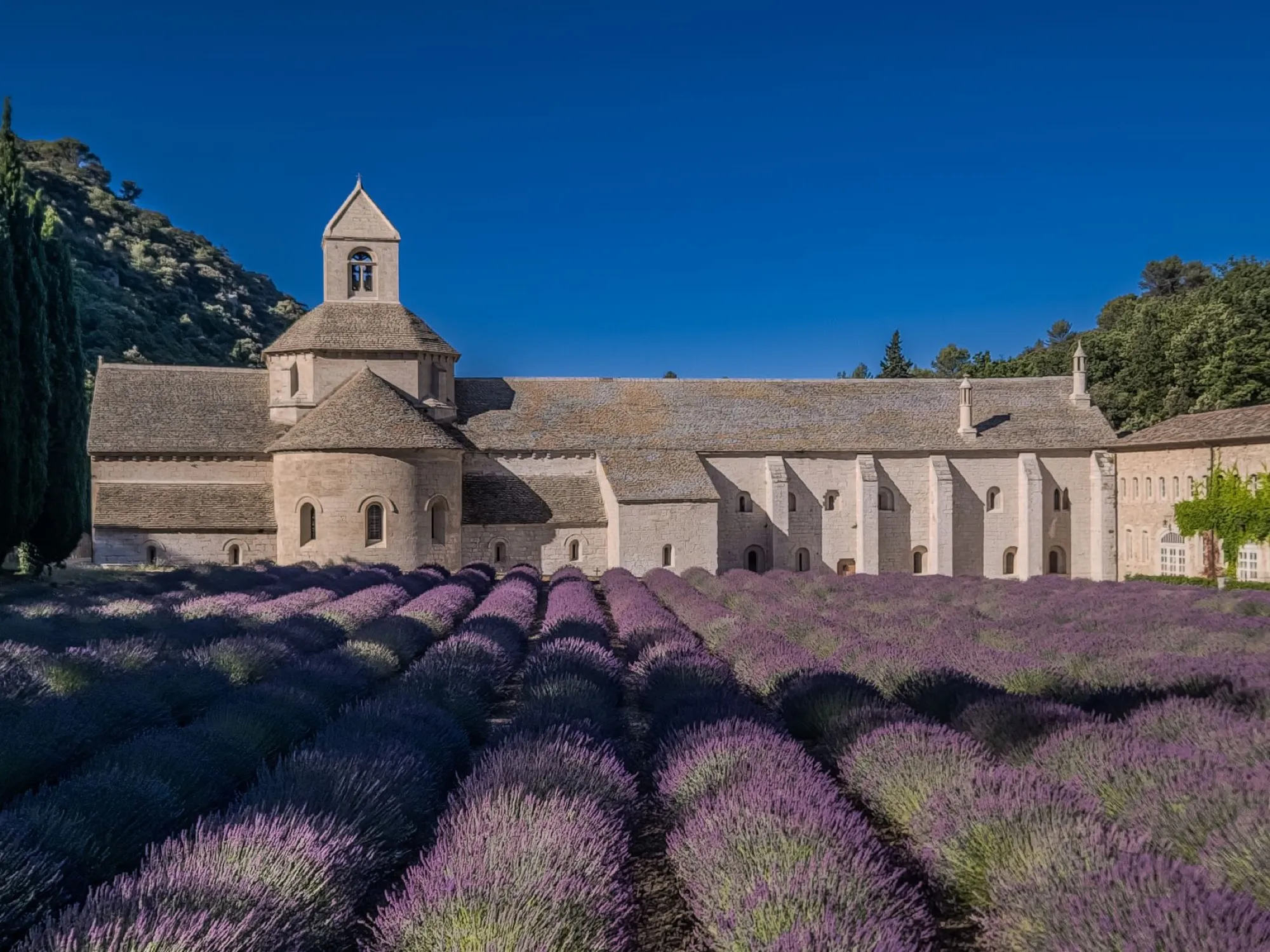
At the bottom of a narrow valley reached by a winding road. Founded in the 12th century and still home to a community of monks, it has a plainness that stops you: bare stone, silence, light. In summer, the rows of lavender in front of the abbey church make it the most famous image of Provence.
A few minutes from Gordes: some twenty dry-stone huts, built without a gram of mortar, with their sheepfolds, ovens and enclosures. An hour is enough to understand how the farmers of the plateau lived.
Farther out, Roussillon and its ochers are twenty minutes away, Fontaine-de-Vaucluse and L’Isle-sur-la-Sorgue twenty-five, Lourmarin thirty-five. One direction a day is enough. Villages at golden hour →
In between
Paths leave the village for the bories and the plateau, between holm oaks and dry-stone walls, with Mont Ventoux as a backdrop. Ask for the trail map at the tourist office, in the château.
We have five estates, from Saumane to Viens. Tell us at breakfast what you like: we call, and you leave with an appointment rather than a list.
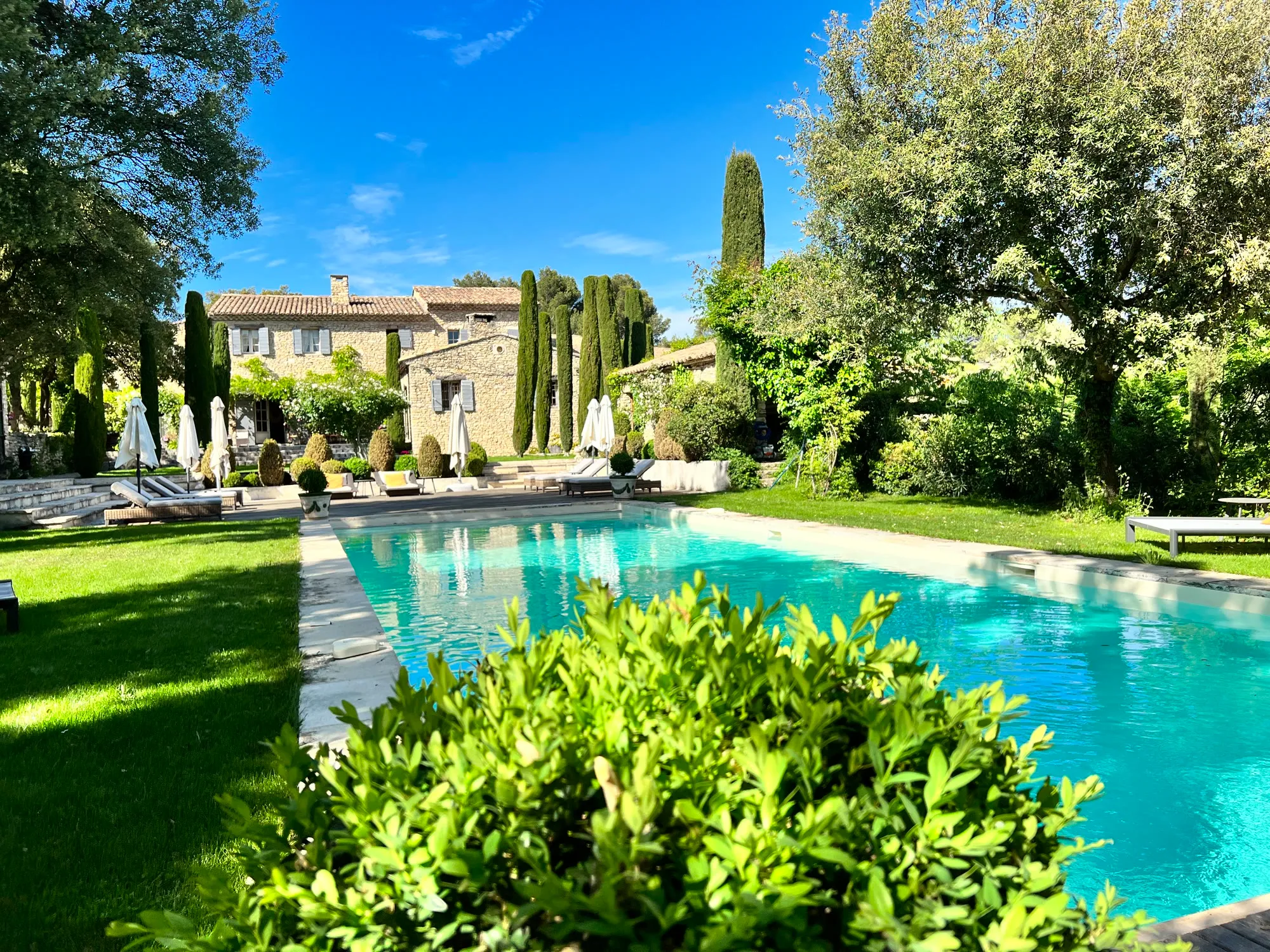
And then you come home. The garden, the pool, the shade of the chestnut trees: that is Gordes too, when you sleep here.
Depending on your time
The lanes, the château square, a coffee on a terrace. The evening before, or the morning you leave, before 11 am.
The village in the morning, one outing only in the afternoon, the viewpoint after 6 pm and a table in the evening.
Add the market if it is Tuesday, a winery, and a whole afternoon in the garden.
Questions
In the morning, the village on foot: the château, the calades (cobbled lanes), the church of Saint-Firmin and the Palais Saint-Firmin caves. In the afternoon, one outing only, Sénanque Abbey or the Village des Bories. In the evening, the viewpoint as the stone turns golden, then dinner in the village.
The market, from 8 am to 1 pm, at the foot of the château: Comtat fruit, goat’s cheeses, olives, honey, soaps, Provençal tablecloths. From Villa Hautvallon it is about a ten-minute walk down. In the afternoon the stalls are packed away and the lanes go back to being quiet streets.
Walk the village after 6 pm, once the tour buses have left and the facades turn the color of honey, then have dinner at one of our three tables: La Trinquette, Beefbar in the warm season, La Table de la Bastide. They are about ten minutes on foot from the house.
The Palais Saint-Firmin caves, beneath the village, stay dry. The château hosts exhibitions. The galleries and workshops in the center can be visited under cover, and a long lunch under a stone vault has never spoiled a stay.
To sleep where this list starts: the five rooms, ten minutes from the château.
Villa Hautvallon
Five rooms, breakfast included, the village a ten-minute walk away.